Select
- Anesthesia and Pain Management
-
Behavior Service
- Blood Donor Program
- Cardiology
- Community Medicine
- Dermatology
- Diagnostic Imaging/Radiology
-
Internal Medicine
- Team
- Our Services
- Preparing for Your Appointment
- What to Expect
- Hyperthyroidism and Iodine (I131)
-
Neurology Service
- Interventional Radiology
-
Oncology
- Team
- Special Equipment
- What to Expect at Chemotherapy Appointments
- Undergoing Chemotherapy
- Care at Home
-
Clinical Trials
- Direct Comparison of CHOP and LOPP Chemotherapy and Genomic Analysis for Naïve T Cell Lymphoma in Client-owned Dogs
- Efficacy and safety of a novel anti-cancer therapeutic for the treatment of metastatic mammary carcinoma in cats
- Phase II open-label non-randomized multicenter clinical trial of trametinib for dogs with histiocytic sarcoma
- Dose escalation study for a novel STING agonist in tumor-bearing dogs
- Time to Maximal Response to Neoadjuvant Corticosteroids in Dogs with Mast Cell Tumors
- Ophthalmology
-
Orthopedic Surgery
- Team
-
Our Services
- Sacroiliac Luxation/Fracture Surgery with the SILIS-MILAD
- Our Equipment and Facilities
- ACVS Fellowship Training Center
- Success Stories
- What to Expect
- Clinical Trials
- Radiation Oncology
- Veterinary Social Work
- Primary Care
- Pharmacy
- Rehabilitation Service
-
Soft Tissue Surgery
- Team
- Who We Are
- What We Do
- Theriogenology
- About the Zoo and Wildlife Service
- Vaccines
- Colic
- Parasites and Strategic Deworming
- Laminitis
- Equine Gastric Ulcers
- Purchase Exams
- Dental Care
-
Breeding
-
Health and Wellbeing for Pregnant Mares
- During Pregnancy
- Before Birth
-
Delivering a Foal
- Tips to Prepare
- Stages of Labor
- Colostrum and Postpartum Care
- Caring for a New Foal
- Cryptorchidism
- After Surgery
- Diagnosis and Treatment
- Prevention
- Treatment and Prevention
- Prevention
- Managing an Outbreak
- Clinical Signs
- Treating PPID
- Determining Quality of Life
- Preparing for Euthanasia
- Euthanasia
- Emergency Kit Checklist
- After an Emergency
-
Health and Wellbeing for Pregnant Mares
Strengthening bonds, saving lives: MSU Community Medicine on the move
Providing high-quality, no-cost surgical care to Michigan's animal shelters while training the next generation of veterinary leaders.
About the Program
Our Mission
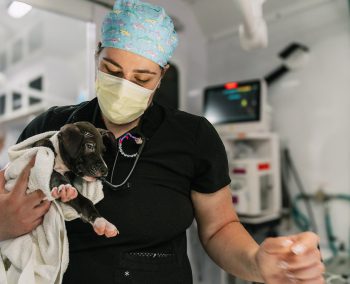
We bridge the gap in veterinary care for underserved communities by bringing our state-of-the-art mobile surgical unit directly to Michigan animal welfare organizations. Because many organizations lack consistent access to veterinarians, we provide timely, high‑quality medical care—primarily through spay/neuter surgeries—to help reduce overall length of stay for homeless animals and give every adoptable pet a healthy head start on their journey home.
At the same time, every procedure is a teaching opportunity. MSU clinical veterinary students perform surgeries under the direct supervision of expert faculty, gaining high‑volume clinical experience and real-world insight into community medicine, shelter medicine, and access‑to‑care challenges across Michigan. Veterinary nursing students also participate in hands‑on skill building, working alongside highly qualified and trained licensed veterinary nurses to develop strong technical competencies.
Together, these experiences help ensure all of our students—across both veterinary and veterinary nursing programs—are ready to begin their careers.
The Heart of the Program: Our Mobile Unit
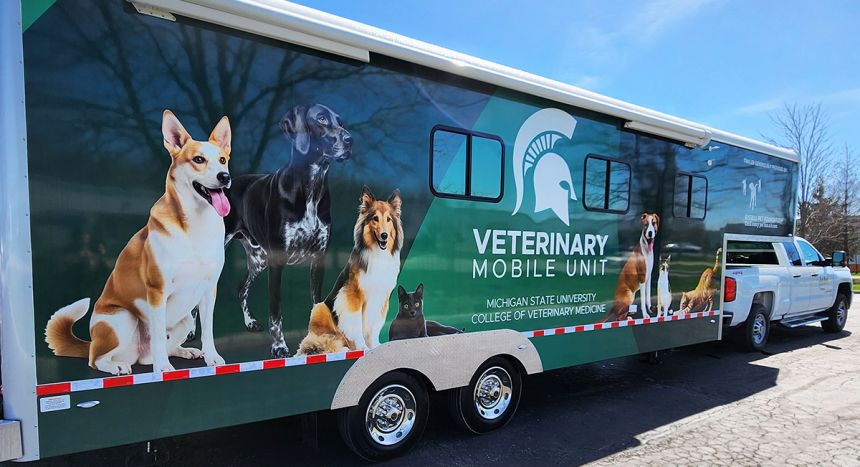
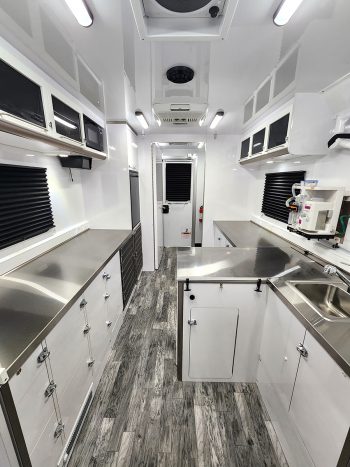
More than just a trailer, our custom-built 32-foot mobile surgery suite is a clinic on wheels. Designed for high-efficiency and high-standard care, it features:
- Two fully equipped surgical tables
- Advanced anesthesia capabilities
- Total independence via an onboard generator
- Climate-controlled recovery area
Are you an organization that might wish to work with the Community Medicine Program? Find partnership details and fill out our interest survey here.