
The Michigan State University College of Veterinary Medicine is celebrating doctoral student Alanis Torres Berríos after she earned two awards at the 2026 Society of Toxicology Annual Meeting in San Diego, California.
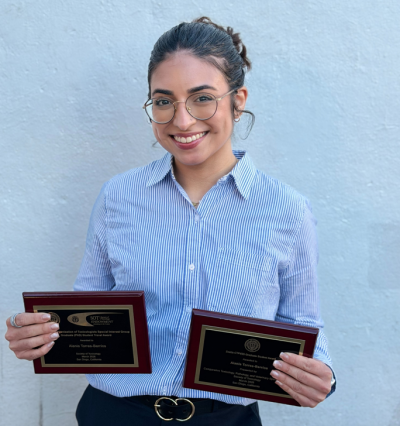
Torres Berríos is a second-year student in the Comparative Medicine and Integrative Biology program and is conducting her dissertation research in Dr. Kari Sant’s laboratory. At the annual meeting, Torres Berríos was awarded the Hispanic Organization of Toxicologists (HOT) Travel Award and the Zoetis-sponsored Comparative Toxicology, Pathology, and Veterinary Specialty Section (CTPVSS) Graduate Student Award. Both awards recognize outstanding graduate student researchers in toxicology and support students presenting high-quality research at the annual Society of Toxicology meeting.
Torres Berríos’s research focuses on understanding the toxicity of metabolites and byproducts of the legacy pesticide DDT, newly emerging environmental contaminants that remain poorly understood despite being widespread in ecosystems and wildlife. In the work presented at the conference, Torres Berríos and collaborators found that many of the compounds may act as reproductive toxicants and endocrine disruptors by mimicking estrogen and activating estrogen receptors. The research also identified one compound, TCPMOH, as particularly concerning because of its toxicity and its effects on zebrafish embryo development and behavior.
“This work helps us prioritize which of these chemicals pose the greatest risk, and it highlights the need to include them in risk assessments to better safeguard ecosystems and understand the potential reproductive and developmental hazards associated with exposure,” says Torres Berríos.
She says she hopes her research contributes to improved monitoring of these contaminants and better protection for vulnerable populations, including wildlife species linked to DDT exposure.
“Ultimately, I hope this work increases awareness of the possible long-term health effects of these chemicals that are highly persistent in the environment,” she says.
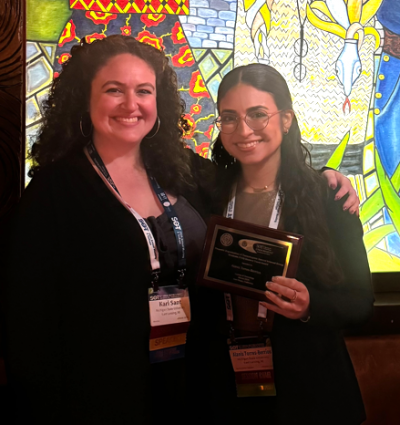
For Torres Berríos, receiving the awards is a meaningful reflection of the work and dedication she has invested in her research journey.
“It means so much to be recognized for the effort I have put in the lab and into reaching this stage of my career as a PhD student,” she says. “The Zoetis award encourages me to keep pursuing my goal of becoming a veterinary clinician-scientist, advancing biomedical research that addresses both animal and public health. And as part of an underrepresented population, the HOT award is special to me because it brought the opportunity to connect with other Hispanic scientists in the field and learn from their experiences navigating a career in toxicology as members of an underrepresented minority.”
Sant praised both Torres Berríos’s research and the enthusiasm she brings to her work.
“Alanis is a superstar, and she has been an absolute joy to have in my laboratory,” says Sant. “Her project is very exciting, but it is her passion, her methodological approach to science, and her hard work that made her the ideal candidate for these awards. I am so proud of her!”