

Michigan State University has been a leader in veterinary education since the university’s founding in 1855 as the nation’s first agricultural college. Veterinary science was part of the original curriculum, reflecting the critical role livestock health played in agriculture.
Formal veterinary education at MSU began to take shape in the late 1800s. In 1883, MSU's first-ever veterinarian, Dr. Edward A. A. Grange, was recruited to teach a full-year course designed to enlighten prospective stockmen. With his arrival, veterinary science took on the standing of a department within the Division of Agriculture and in 1910, the university officially established its degree-granting Veterinary Division under the leadership of Dr. Richard P. Lyman.

Over the following decades, the program expanded rapidly, adding specialized departments in anatomy, pathology, microbiology, pharmacology, medicine, and surgery while developing advanced facilities to support teaching, clinical training, and research. As society changed, curriculum evolved to match new needs, such as a shift from veterinary medicine's focus on livestock and horses to companion animals.
Throughout its history, the College has responded to evolving needs in animal and public health. Faculty, students, and graduates contributed significantly during both World Wars, while research programs helped address livestock diseases, food safety concerns, environmental toxicology, and emerging public health challenges. MSU also played a leading role in establishing diagnostic services that today support animal health across Michigan and beyond.
The College experienced major growth during the twentieth century. Landmark milestones included the opening of the Veterinary Clinical Center (now the Veterinary Medical Center) in 1965—then the largest facility of its kind in the United States—the creation of innovative curricula emphasizing hands-on learning and problem solving, and the expansion of specialty training, research programs, and diagnostic services.
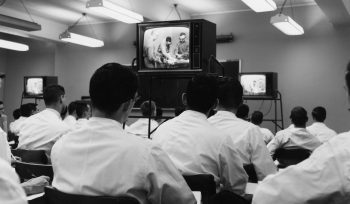
In 1955, as Michigan State College became Michigan State University, the School of Veterinary Medicine was renamed the College of Veterinary Medicine. In the fall of 1968, 18 students enrolled in the first class of the veterinary technology program (today called the Veterinary Nursing Program). The program's initial emphasis was on laboratory animal care, but in the early '70s, the orientation changed to clinical veterinary practice. From that point on, veterinary technology students received their clinical training in conjunction with veterinary medical students in the same clerkships.
In 1976, extensive losses in livestock and potential danger to human health were caused by the inadvertent contamination of animal feed by a chemical fire retardant, a polybrominated biphenyl compound (PBB). Response efforts led to the development of the Animal Health Diagnostic Laboratory, today the MSU Veterinary Diagnostic Laboratory.
Since then, the College has continued to strengthen its national reputation through investments in clinical care, biomedical research, population medicine, food safety, toxicology, comparative oncology, and equine and farm animal health.
More than a century after welcoming its first veterinary students, the College remains committed to preparing future veterinarians, scientists, and leaders to address the complex, One Health challenges of a changing world.
Further reading:
- A History of Michigan State University's College of Veterinary Medicine: More than 50 years of progress, 1970-2022 by Drs. Janver Krehbiel and Frederik Derksen, 2022
- Veterinary Medicine in Michigan by Charles Cleon Morrill, 1979