
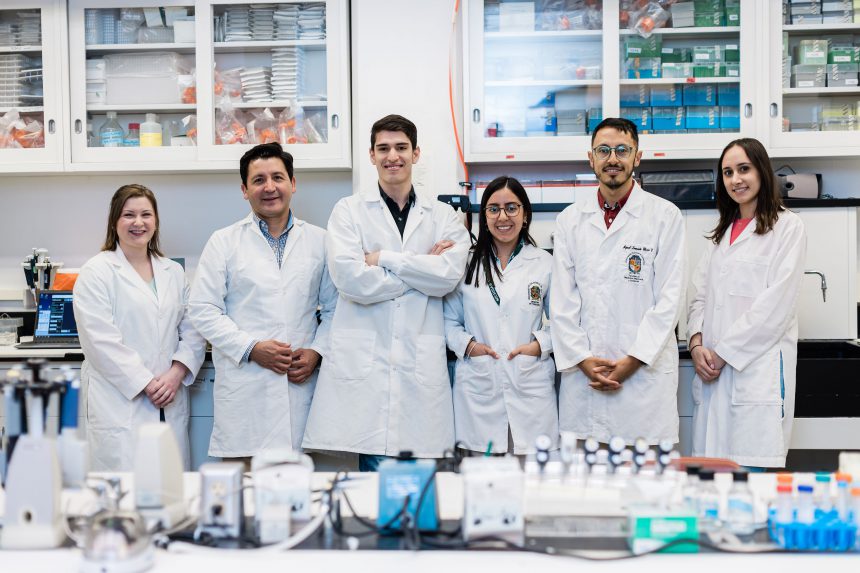
The Contreras AdipoLab is a Comparative Adipose Tissue (AT) Biology research laboratory at Michigan State University. Our mission is to define adipose tissue remodeling processes within the context of acute catabolic states and chronic cardiovascular diseases. Utilizing a One Health approach, we employ bovine and rodent models to identify conserved mechanisms of adipose tissue biology that impact both animal and human health.
Our Research Themes

1. Acute Catabolic States: The Periparturient Dairy Cow Model
The transition from late gestation to early lactation represents one of the most extreme metabolic shifts in nature, characterized by a rapid transition from a positive to a negative energy balance. During this period, dairy cows become highly susceptible to metabolic and inflammatory diseases.
Our research investigates how adipose tissue remodeling either facilitates a successful transition or contributes to metabolic collapse. Furthermore, the periparturient cow serves as a highly relevant model for human conditions—such as endotoxemia and bacteremia—that involve rapid physiological deterioration under acute metabolic stress.
- Lipolysis & Endotoxemia: We study the "metabolic tipping point" where intense lipolysis and endotoxemia converge to drive systemic inflammation.
- Clinical Significance: This work provides a high-resolution map of AT remodeling that parallels human conditions like sepsis-induced metabolic collapse and acute lipodystrophy.
2. Chronic Cardiovascular Disease: Perivascular Adipose Tissue (PVAT)
AT remodeling is also a hallmark of chronic cardiovascular diseases like hypertension. We focus on the biology of Perivascular Adipose Tissue (PVAT), a specialized fat depot surrounding the vasculature. This unique site exerts direct paracrine and mechanical influence on blood vessels:
- Remodeling in Hypertension: We investigate how chronic mechanical forces and overnutrition trigger pathological PVAT remodeling, resulting in the loss of its innate vasoprotective properties.
Mechanobiology in Adipocytes: Utilizing advanced lineage-tracing and the Piezo1 mechanosensory channel, we define how adipocyte progenitor cells contribute to the progression of chronic cardiovascular diseases.