Msu Vet Med 2

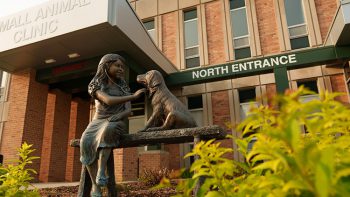
The College of Veterinary Medicine at Michigan State University has excellent facilities, technologies, and equipment to support teaching, research, and clinical service.

The College consists of 170,000 square-feet of office, teaching, and research space, as well as the Veterinary Medical Center and Veterinary Diagnostic Laboratory.

The Veterinary Medical Center is a premier veterinary referral hospital with a wide range of board-certified specialists and a large and diverse caseload.
23 Mobile Hero

The MSU College of Veterinary Medicine's many specialized centers also include:

The Matilda R. Wilson Pegasus Critical Care Center for horses

The Matilda R. Wilson Pegasus Critical Care Center is a 9,000-square-foot facility that allows the Veterinary Medical Center to house large-animal patients with infectious diseases in an isolated place, minimizing the risk of spreading disease to other animals and people while providing state-of-the-art critical care.

The center includes a number of special features, including ten individual isolation stalls, on-site laboratory capability, and a specialized ventilation system that helps prevent the spread of infectious diseases. Video equipment allows clients to see their animals without entering the isolation stall.

The Mary Anne McPhail Equine Performance Center

The Mary Anne McPhail Equine Performance Center is an 18,000-square-foot, state-of-the-art facility for clinical evaluation and research of equine performance. The center has an indoor arena, lameness runway, force plates, high-speed treadmill and neuromuscular diagnostic laboratory used to uncover the basis for lameness and poor performance. With state of the art diagnostic and imaging equipment in the adjacent equine hospital, the facility and world class clinicians keep equine athletes on track for peak performance. More information here.

LeBlanc Clinical Skills Laboratory

In the LeBlanc Clinical Skills Lab, students learn and practice critical skills on simulation models before working with live animals. Later in their coursework, the students will use these models to practice skills, such as injections, drawing blood, suturing, assisting with calf delivery, equine colic, and other skills. But at the start of their first year, these students use the models to learn and practice the basics of approaching, handling, and restraining animals.

Livestock and Equine Teaching and Research Centers

Students at the College of Veterinary Medicine spend time on MSU's many campus farms, and the College has partnerships with the Veterinary Research Farm as well. These facilities include the teaching and research centers for cattle, sheep, and horses, including MSU's state-of-the-art Dairy Cattle Teaching and Research Center. Find more information here.

Find information on contracted events involving the housing or exhibition of animals at Michigan State University facilities at the page of the Institutional Animal Care & Use Committee.