
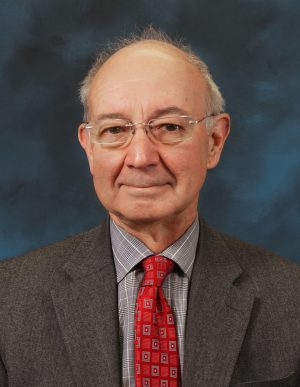
On March 20, Dr. William “Bill” Schall, Professor Emeritus from the Department of Small Animal Clinical Sciences at the MSU College of Veterinary Medicine, passed away at the age of 83.
Dr. Schall’s career at and beyond MSU was long and storied. A 1966 DVM alum of Purdue University, he joined the College's faculty in 1976. The year before, he was a member of the first class to become board-certified via examination by the American College of Veterinary Internal Medicine (ACVIM), and served as its president from 1979 to 1982. He retired from MSU in 2014.
Over the years, he treated thousands of patients and mentored hundreds of students and interns/residents, earning awards and accolades as he went—and also advancing clinical science through research and practice, specifically as an expert in endocrine diseases like diabetes.
A pillar at the College of Veterinary Medicine according to those who knew him, he was a gifted clinician, scientist, and teacher. He observed anomalies, pondered them, and asked pertinent questions. He was a renowned endocrinologist and hepatologist with a publication record spanning the 1960s to the 2010s. His contributions to the understanding of diabetes mellitus, Addison’s disease, and copper toxicosis were especially impactful.
Dr. Schall’s legacy is carried forward by the thousands of veterinary students he taught and hundreds of house officers he mentored/trained, many of whom are in academic and leadership positions today.
Dr. Bari Olivier, Professor of Cardiology in the Department of Small Animal Clinical Sciences, writes about his longtime friend, mentor, and colleague:
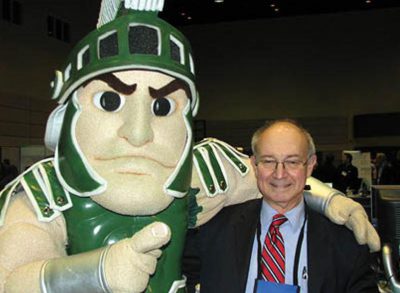
“Dr. Schall was a man of tradition. As an example, he was a gentleman of the 1950/60 era. He opened doors for everyone. He said ‘please’ and ‘thank you’ profusely. He always deferred to others, first. He was never the first or loudest to speak, but in so doing, often had the biggest impact.
As a mentor he was again focused on traditional strengths of medicine. He pushed us to really seek the limits of truth in medical science, not just the current trend. He believed students benefited most from real-life clinical work rather than simulations, and pushed us to get students ‘in front of’ clients and patients to learn best how to be a good veterinarian.
He was totally committed to our referring veterinarians. I can recall him spending hours, literally hours, on the phone in a day discussing a difficult case with a referring veterinarian. And those were ‘regular’ days.
Dr. Schall loved the arts, especially music, and was an accomplished musician spanning several instruments. He was an avid hunter of upland game and loved to fish, mostly to be out in the woods with a good dog, sharing it all with family and friends.
Most of all, Dr. Schall was a man of great faith and love for his family.
He had a huge impact on so many of us. He taught us so much about medicine, but much more importantly, this selfless man who avoided recognition, showed us what it meant to be a fine human being.”