
Daneris Mestres Alemany from Louisiana State University and Joshua Tripp from the University of Tennessee have been named the 2026 recipients of the Merck Animal Health Food Systems Fellowship Scholarships through the Michigan State University College of Veterinary Medicine.
For veterinary students interested in food animal medicine, there is no single path into the field. Research, regulatory medicine, clinical practice, and emerging technologies all play important roles in protecting animal health and strengthening the food system.
This summer, Mestres Alemany and Tripp explored two of those paths as participants in the Michigan State University College of Veterinary Medicine’s Food Systems Fellowship (FSF) Program. Their experiences took them into very different areas of food animal medicine, from studying heat stress in dairy cattle to working with regulatory veterinarians across Michigan.
The FSF Program gives veterinary students from across the country the opportunity to spend a summer gaining hands-on experience alongside MSU faculty and industry partners. Students complete projects tailored to their interests while developing a deeper understanding of the challenges and opportunities within food animal medicine.
“The shortage of food animal veterinarians is a challenge that can only be addressed by providing students with early, meaningful exposure to the field,” says Dr. Ángel Abuelo, professor of cattle health, MSU Red Cedar Distinguished Professor, and head of the FSF program. “The continued commitment of our industry and university partners enables students to pursue a summer in food supply veterinary medicine. Merck’s scholarships reinforce the profession's recognition of the students’ contributions and its investment in their future.”
The MSU College of Veterinary Medicine has partnered with Merck Animal Health since 2006, and the company has funded FSF scholarships since 2013. This year, $20,000 was awarded in total, split between two students.
“Merck Animal Health is proud to support the next generation of veterinary professionals who are passionate about advancing animal health and welfare,” says Justin Welsh, DVM, executive director of livestock technical services at Merck Animal Health. “These scholarships recognize exceptional students who demonstrate the dedication and potential to make a meaningful impact in the veterinary profession and the livestock industry.”
Daneris Mestres Alemany
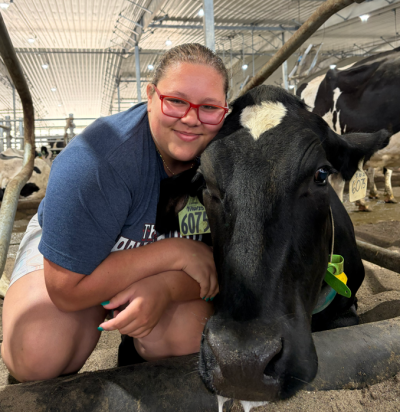
Mestres Alemany spent the summer investigating how heat stress affects dairy cattle and how emerging technology could help producers better understand and manage its effects.
Her research project, “Heat-Stressed Dairy Cattle: Precision Monitoring Technologies to Characterize Feeding Behavior and Thermal Load in Dairy Cows,” sought to identify measurable changes that could help producers better recognize and respond to heat stress in dairy cattle.
“With climate change contributing to more frequent and severe periods of heat stress, dairy cattle are increasingly facing challenges that can impact their health, welfare, and productivity,” Mestres Alemany says. “My research explored how precision monitoring technologies can help us better identify and understand these changes, with the goal of developing more effective strategies to manage heat stress and help dairy producers adapt to a changing climate.”
The experience gave Mestres Alemany an opportunity to explore how research and technology can be applied to real-world challenges in the dairy industry.
“The fellowship provided me with hands-on research experience that directly aligns with my goal of pursuing a career focused on food animal health, welfare, and production efficiency,” she says. “I am incredibly grateful to Merck Animal Health for supporting students who are working toward the future of animal health and food production.”
Mestres Alemany also credits her mentors in the Madureira Lab with making the experience meaningful.
“They made me feel welcomed from the very beginning and created an environment where I was able to learn, grow, and truly enjoy the research experience,” she says.
Joshua Tripp
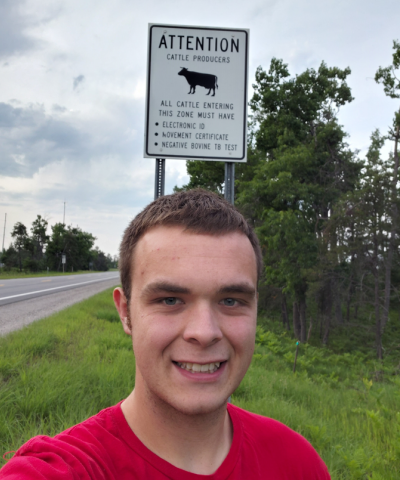
Tripp spent his summer working with the Michigan Department of Agriculture and Rural Development (MDARD), gaining firsthand experience in the role regulatory veterinarians play in protecting animal and public health.
He participated in inspections, tuberculosis testing, and public information events while traveling throughout Michigan to learn about the many ways MDARD supports the state’s animal industries. His primary projects focused on Michigan’s unique bovine tuberculosis status, including developing checklists for TB disinfection and reviewing guidelines for cattle movement.
Tripp’s interest in regulatory medicine began during his veterinary education, when he was introduced to the field in one of his classes. With a passion for agriculture and an interest in economic and political processes, he saw FSF as an opportunity to better understand the broader systems that shape food animal medicine.
“While I hope to enter food animal practice upon graduation, this experience will make me a well-rounded practitioner who better understands the food animal industry,” Tripp says. “Furthermore, as a result of this fellowship, I am also interested in pursuing a career in public health after spending some time in clinical practice.”
For Tripp, the scholarship provided meaningful support as he pursued the experience.
“I am incredibly grateful to Merck Animal Health for investing in my future and easing my financial burden through this scholarship,” he says. “I look forward to improving health, welfare, and efficiency as a veterinarian within the agricultural industry, and I am honored to have been selected for this award.”