
Every May, the American College of Veterinary Ophthalmologists hosts the ACVO®/Epicur® Service Animal Volunteer Eye Screening Event, providing complimentary eye exams for qualified service and working animals across the United States and Canada. At the Michigan State University Veterinary Medical Center, the annual event gives animals ranging from K-9 officers to search-and-rescue partners access to specialized ophthalmology care.
Among this year’s participating service animals were ten miniature horses, who trotted into the Large Animal Clinic for their annual eye exams.
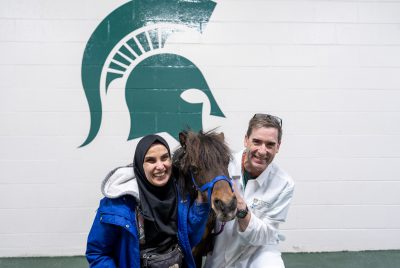
Mona Ramouni brought in two fully trained service mini horses, including her seeing eye horse, Cali, and eight that are still in training. The exam was performed by Dr. András Komáromy, an ophthalmology specialist, with assistance from Donna Averill, LVT, and a group of students. Ramouni has participated in the event since 2018 and says the screenings provide important peace of mind.
“As a blind person, I rely on my horse’s eyes for a lot,” says Ramouni. “These horses are guides or are supposed to become guides, and I want to make sure the horses in training have the best possible start because they’re going off to other people. I want these horses to make a difference in others’ lives the way that Cali made such a difference in mine. So having this service means a lot.”
According to the ACVO, volunteer ophthalmologists provide approximately 8,000 free eye exams each year through the program, helping identify developing conditions such as cataracts, glaucoma, and retinal disease before they become more serious concerns.
“It’s an honor to participate in this event each year,” says Komáromy. “Service animals support humans in many ways. It’s important to give back to them and the community.”
Ramouni says this year’s visit helped identify the early development of slight cataracts in Cali, now 21 years old.
“I got to find out something I wouldn’t have otherwise,” she says. “Now I know to look for that.”
In addition to the exams themselves, Ramouni says she appreciated the experience her horses had interacting with veterinary students and staff throughout the day.
“All the students were excited,” she says. “Every horse got the attention they needed and the time they needed to make sure their eyes were great.”
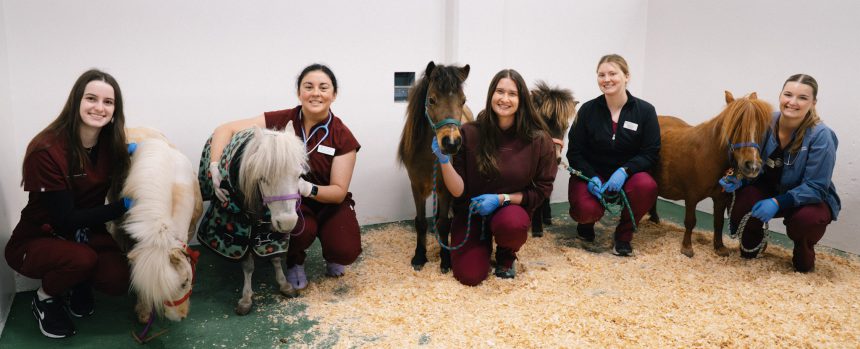
Ramouni and her organization, The Cali Corp., breed and train miniature horses specifically for guide work, a process she says requires careful selection, extensive training, and years of dedication.
“I wish people understood that it’s not every miniature horse that can do this job,” she says. “We pick the best temperaments — the cream of the crop. They do such important work.”

The long lifespan of miniature horses is also part of what makes them exceptional service animals.
“I asked Mona during her first visit, ‘Why a mini horse?’” says Averill. “She explained that it was heartbreaking to have to give up or retire a seeing eye dog every 8 to 12 years, but horses can live until 30! It is amazing to see what they can do once they are fully trained.”
As Ramouni reflects on the eight years of bringing mini horses to MSU for screenings, she emphasizes her appreciation for the faculty, staff, and students who make the event possible each year.
“We’re so grateful this service exists,” she says. “It really does make such a difference for us.”