
When rescued animals at Abraham Ranch face critical medical crises, the MSU College of Veterinary Medicine stands ready to deliver high-level emergency care. Read how this unique community relationship is saving lives, healing trauma, and giving veterinary students hands-on experience in farm animal medicine.
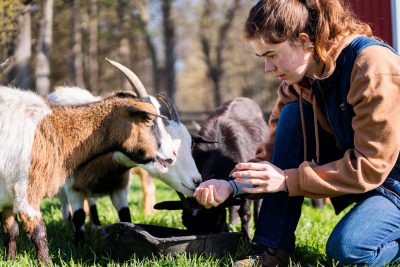
On a stretch of land outside Clarkston, Michigan, roughly 90 acres of pasture, woodland, marsh, and trail run through a place that takes a minute to take in. Sandhill cranes pick through the reeds. Turkeys work through the brush. And somewhere in the middle of it all, a family built their farm animal sanctuary.
Abraham Ranch, founded in 2020 by Katie and Erik Abraham, started as a dream. "It was a love of nature and conservation," Katie says. "A big piece of property combined with a love of animals, and a place that creates a sense of community for more than just us." What began as a vision is now home to more than 60 animals—including horses, cows, donkeys, pigs, sheep, goats, and barn cats—and a volunteer network that Katie says feels like family. "The relationships and friendships that have formed here... it truly is a family, and I think that's the most beautiful part about it." Running a sanctuary at this scale is demanding work. Animals often arrive with unknown histories, old injuries, and medical needs that exceed what most private owners ever encounter. For Abraham Ranch, the Michigan State University College of Veterinary Medicine has become central to that care.
How It Started
The connection between the ranch and the College did not happen by accident, and it didn't start on campus either.
Kelley Meyers, DVM, now the Executive Director of the MSU Veterinary Medical Center, was serving as Chief Medical Officer at Michigan Humane when she first crossed paths with the Abrahams. Farm animals like cows, pigs, and horses present a recurring challenge for shelters with space and infrastructure limitations. At the time, Katie Abraham was serving on the Michigan Humane board, working closely with Meyers while simultaneously mapping out what a dedicated farm animal rescue could look like. Farm animals like cows, pigs, and horses presented a recurring challenge for shelters facing space and infrastructure limitations, and the two found a shared vision in addressing that gap.
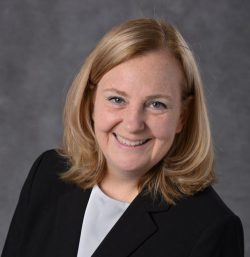
"I had the opportunity to provide input on considerations related to land selection, housing, and the needs of different species during those early planning discussions," Meyers says. When she later joined the College, the relationship she built with the Abrahams came with her.
"Dr. Meyers was someone I knew through Michigan Humane, and I really admired her," Katie says. "She's wonderful at her job, and a wonderful person. So, we stayed in touch, and I knew that when she went to MSU, it would be a wonderful relationship."
Meyers has remained closely involved, eventually joining the ranch's board and continuing to volunteer alongside her daughter. "I would describe it less as a formal partnership and more as a positive community relationship built around shared interests in animal wellbeing, education, and outreach," Meyers says. "Organizations like Abraham Ranch help highlight the many different ways animals and veterinary medicine can positively impact people and communities beyond traditional clinical care."
"It's incredible to have such a resource so close, where we know our animals will always get the best care," Katie says.
When It Matters Most
The impact of that relationship becomes clear during emergencies. Jay Reynolds, the ranch manager, is usually the one behind the wheel when an animal needs to get to East Lansing in a hurry. "There's always a bit of urgency when you're driving there," Reynolds says. "It's similar to emergency situations with people, where time is important to save a life."
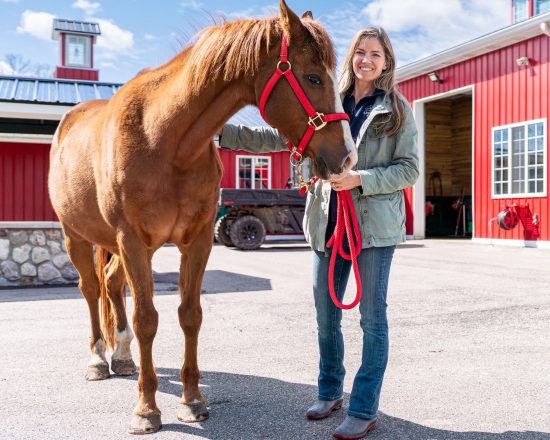
The ranch has faced those moments more than once. A horse named Slim Shady arrived at the Hospital presenting with severe colic symptoms. Clinicians discovered a benign tumor wrapped around his intestines and rushed him into emergency surgery to remove the mass alongside a compromised section of his bowel. He has since fully recovered and is back in the pasture.
A pig named Bruce, rescued from a severe neglect case, required multiple complex, life-saving operations at the Hospital. He made such an impression on his care team during his recovery that one of his attending clinicians, Ashley VanderBroek, DVM—who performed the procedures that saved his life—eventually adopted him.
"The relationship the ranch has built with the doctors over the last four years has been fantastic," Reynolds says. "Having 24-hour access to a top-notch emergency facility provides immense peace of mind."
While the College steps in during a crisis, Caroline Burglass, DVM, manages the ranch's routine care. A veterinarian at Hadley Hill Equine in Oakland County, Burglass earned her veterinary medical degree from Louisiana State University before completing an internal medicine residency at Michigan State University in 2020.
"During my training at the College, I worked with many of the sanctuaries that brought animals to the clinic," Burglass says. "My experience with those cases definitely contributed to my interest in sanctuary and rescue work." Burglass's visits cover everything from vaccines and dental care to routine field medicine, though sanctuary work requires an adaptable approach. "One of the things that changed how I approach these cases was making sure to document everything with pictures, keeping thorough records, and really trying to get to know each animal," she says. "A lot of times, we just don't have a history on them."
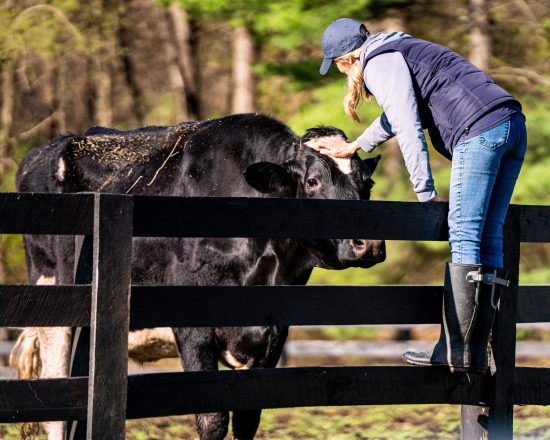
When a case exceeds what she can manage on-site, Burglass utilizes the network she built during her residency. "I'm fortunate to have both a professional and personal relationship with the veterinarians at the College," she says. "Whenever I need backup, it's easy to get a second opinion and ensure we're making the best decisions for the animal."
Annika O'Brien, the ranch's animal welfare manager, joined the ranch full-time after Michigan Humane partnered with the Abrahams on rescue operations, and she accompanies every animal that makes the trip to East Lansing. "They meet you right in the parking lot," she says. "They are excellent at communicating clinical concepts in plain language. Having a team you trust completely is vital."
"We share a joint mission," Katie says. "They do everything they can to save a life, and so do we."
The Next Generation
Meyers says the ranch stands for more than just animal conservation. "One aspect of Abraham Ranch's work that deserves more visibility is how they integrate animal care, human wellbeing, education, and community outreach into a single mission," Meyers says. "Veterinary medicine increasingly discusses concepts like One Health and community engagement, and organizations like Abraham Ranch demonstrate how those ideas apply in practical ways."
These concepts are most visible in the ranch's volunteer program. Katie notes that at least four pre-veterinary students have gained experience at the sanctuary, including three current volunteers and one who has since entered clinical practice. For these students, the ranch translates textbooks and lessons into real-world applications.
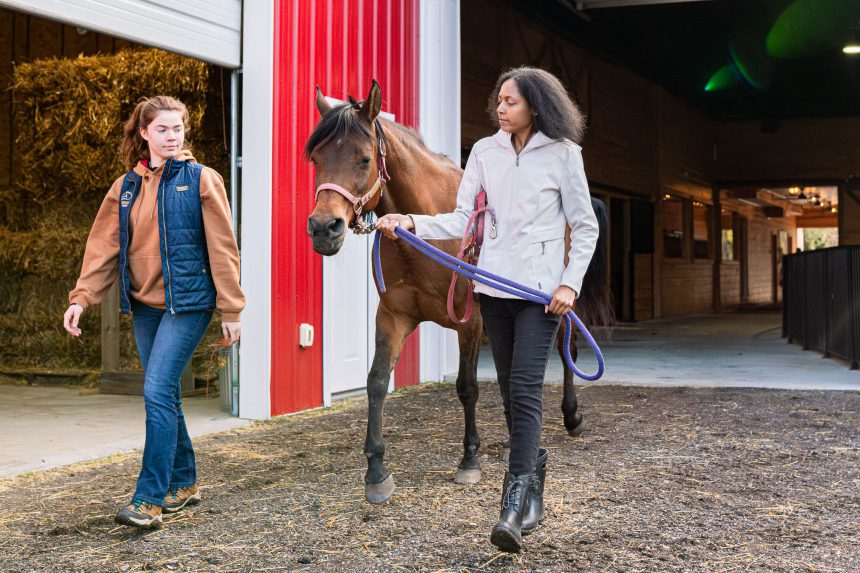
Courtney Marsh, a metro-Detroit pre-vet student who came to the ranch seeking large animal experience, says her time there shifted her career goals toward mixed-animal medicine and a potential PhD focused on zoonotic diseases. A recent trip to the College with a ranch resident confirmed her direction. "I got to see how the professors mentored the students through the process," Marsh says. "It made me feel like this is something I can actually do. It's challenging, but the support system at the College is real."
Callie Ingham began volunteering after a high school assignment sparked her interest in agricultural animals. Watching the clinical team at the College handle an emergency case left a lasting impression. "Seeing how calm they remained and how systematically they worked—those details made a huge difference," Ingham says. "It was incredible to watch."
For students like Marsh and Ingham, the ranch and the College serve as examples of what their future careers could look like.
The Gold Standard
Reynolds says the goal for the ranch has always been clear. "Erik and Katie's ambition is for this to be the gold standard," he says.
That vision is reflected in how the ranch cares for the animals that call it home. Katie describes a mix of long-term residents alongside newly arrived animals, some of whom have never known a gentle hand. "A lot of animals come in fearful of people," she says. "They see that safe touch. They see that they're cared for. It's been nice allowing them to adjust and maybe heal from whatever trauma they experienced."
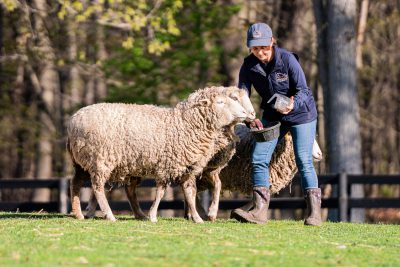
Katie notes that, unlike many sanctuaries where animals remain permanently, Abraham Ranch maintains a structured adoption program for animals ready to find new homes. Prospective adopters undergo a vetting process, and Burglass helps ensure placements are appropriate by conducting facility checks to confirm farms or families can properly care for each animal. It’s one more way the ranch works to ensure an animal’s second chance doesn’t become a return to the circumstances that brought them there.
Meyers, who has watched the ranch grow from planning conversations at Michigan Humane to an organization with a board, a staff, and dozens of volunteers, says what Abraham Ranch has built points toward something the field is still learning to fully recognize. "Their work highlights the importance of relationship-building and trust within communities," she says, "which are essential for creating long-term impact and meaningful engagement around both animal and human wellbeing."
"Now it just feels like the College is an extension of us," Katie says. It's a partnership built on trust and expertise, standing ready to be activated every time an animal needs it most.
Abraham Ranch is located in Clarkston, Michigan. To learn more or support their mission, visit abrahamranch.com.