
Learn about an MSU College of Veterinary Medicine alum who is taking the fight against rabies worldwide after an eye-opening vaccination mission to Tanzania.
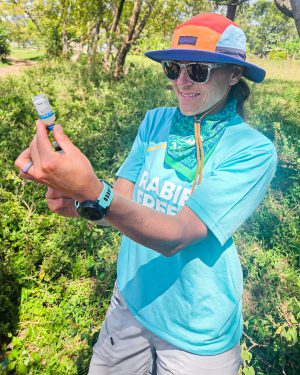
On the first day of vaccinating animals in a remote Tanzanian village, Dr. Anastasia McIntosh noticed a young girl standing outside her family's hut. She clung to her mother's leg, peeking out at the visiting veterinarian with cautious curiosity.
"I couldn't help but think that this child will face many challenges in her life," McIntosh says. "However, because of our work that day, contracting rabies will not be one of them."
McIntosh, a 2007 graduate of the Michigan State University College of Veterinary Medicine, is now a practicing veterinarian and chief of staff at Polo Springs Veterinary in Colorado Springs, Colorado. But her path to the front lines of a global public health mission began long before her trip to Tanzania. In many ways, it started during her first year of veterinary school.
As a first-year student at the College, McIntosh was selected for an externship with the Centers for Disease Control and Prevention's rabies department in Atlanta. She says the experience opened her eyes to a connection she hadn't considered before, one where animal medicine and human health were deeply intertwined.
"It was the first time I had seen how closely they are linked and the impact veterinarians can make not only in animal medicine, but in human health as well," she says. "I have carried this interest into private practice."

Years later, when McIntosh learned that Polo Springs Veterinary, part of the Vetcor veterinary network, had partnered with a Washington State University-based organization called Rabies Free Africa, that early passion was rekindled. She signed her hospital up to participate, and the practice began donating a portion of proceeds from every rabies vaccine administered to support the mission. McIntosh also applied for the opportunity to travel to Tanzania as a volunteer veterinarian.
"I felt immediately drawn to the cause with my previous rabies background," McIntosh says. "I love my day-to-day job in clinical practice, but this felt like an opportunity to do something more with my veterinary knowledge and skills."
Into the Field
Rabies Free Africa is a program of the Paul G. Allen School for Global Health at Washington State University's College of Veterinary Medicine. Its mission is to establish self-sustaining vaccination programs across East Africa with the goal of eliminating dog-mediated human rabies deaths. According to the organization, an estimated 60,000 people die from rabies each year globally, with 99% of cases occurring in Africa and Asia. McIntosh joined a group of veterinary professionals in Tanzania for a ten-day vaccination campaign in remote villages. The days were long and the conditions unpredictable. She says they worked in two ways: going from hut to hut through the community, or setting up centralized sites where pet owners would gather and wait for their turn.
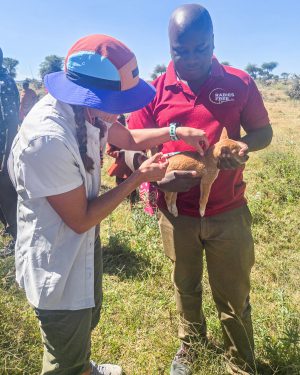
She says the process was well organized. Each animal was identified using a facial recognition app, and a handwritten rabies certificate was issued after each pet was vaccinated. Vaccines were stored locally using a clay pot cooling device known as a Zeepot, developed by communities in the region and capable of keeping vaccines temperature-controlled for months without regular refrigeration.
After ten days, the group had vaccinated nearly 1,500 animals.
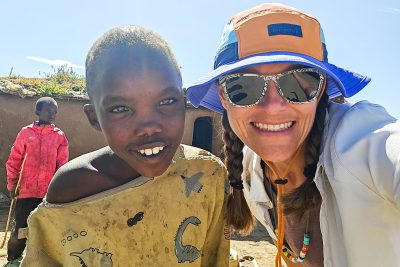
"Adults and children would walk for miles with their pets just to receive care," McIntosh says. "They would line up and wait for hours for their turn."
Many of the villages were so remote that even Swahili was not spoken, only local tribal dialects. But the enthusiasm of the communities, she says, needed no translation.
"Some basic human emotions transcend language barriers," she says. "In that moment, I knew how much the work we were doing there meant to those families. We were truly saving lives."
A $100 Question
The gravity of that reality hit hardest, McIntosh says, when she accompanied a local epidemiologist on a follow-up visit to a family in the community. A five-year-old girl and a neighboring child had been bitten by a dog months earlier, and the dog had since tested positive for rabies. According to McIntosh, families in the community had pooled their resources to fund post-exposure treatment for both children, but the full course of care, which she says can cost the equivalent of an entire family's annual salary in the region, was out of reach. The total cost: 100 US dollars.
"I looked at this young girl and knew that her life still hung in the balance due to a disease that is completely preventable," McIntosh says. "The women I met on the trip were mothers, just like me, who work hard every day to provide for their families. However, their children are dying from a disease that I as a veterinarian can prevent. It left me with a profound sense of duty."
"I vaccinate dogs and cats for rabies on a daily basis back home," she says. "That being said, I have rarely stopped to think about what that vaccine means. It makes it safe for a child to play with a pet. It ensures a mother and father that their family can safely have pets in their home. It allows communities to thrive when vaccination rates are high enough to reach herd immunity."
Running With Purpose
A runner since veterinary school, McIntosh decided to organize a race to keep the mission going after returning home. Going virtual would let her reach beyond Colorado Springs and make a wider impact for the cause. The result is the Run Wild! Rabies Free Africa 5K, a virtual event scheduled for May 22 through 25, 2026, open to runners, walkers, and anyone who simply wants to donate.
"I have loved the process, but there has been a learning curve," she says. "I have raced for years but have never designed a race."
The response, McIntosh says, has exceeded her expectations. Participants and donations have come in from across the country, the event has already passed its fundraising goal, and Rabies Free Africa staff in Tanzania have even organized a group to participate from the ground in Africa.
For McIntosh, the 5K is just the beginning. She plans to host the race again next year and sees her time with Rabies Free Africa as a long-term commitment.
"As veterinarians, we are uniquely positioned to eradicate rabies," she says. "Human physicians can care for exposed patients, but we can control the disease before the dog bites."
She hopes fellow MSU alumni and current students hear that message clearly.
"I would encourage students to be open-minded and to never stop exploring new ways to use their veterinary education," McIntosh says. "Veterinarians are uniquely qualified to end the global rabies crisis. That is a powerful thought. What other good can we do in the world to serve not only animals, but humans well?"
It’s a question she first started asking in a CDC laboratory in Atlanta. She found part of her answer in the villages of Tanzania. And she’s not done yet.