
Discover how MSU College of Veterinary Medicine students expanded their clinical horizons beyond traditional household pets by hosting the inaugural ZEWA Exotics Symposium, complete with expert-led wet labs and hands-on wildlife conservation experiences.
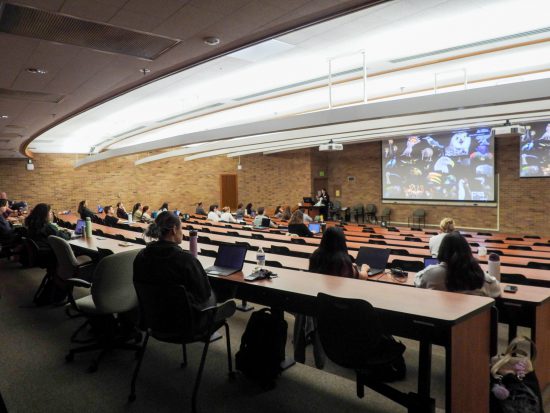
Veterinary medicine extends far beyond household pets, and a group of dedicated students at the MSU College of Veterinary Medicine made sure to prove it. Over a packed weekend, the MSU Zoo, Exotics, Wildlife, and Aquatics (ZEWA) Club hosted its inaugural Exotics Symposium, bringing together two full days of lectures, networking opportunities, and four hours of hands-on wet labs each afternoon.
"The goal of ZEWA has always been to provide MSU students with the opportunities to learn more about species they wouldn't otherwise get to see in our veterinary curriculum," says ZEWA Student President Michael Visniski. "When most people think of the vet, they usually think of dogs and cats, so a lot of people forget that birds, reptiles, fish, and so many other species need veterinary care too."
To bridge that gap, the student-led event spanned the organization's four core pillars—zoo, exotics, wildlife, and aquatics. Visniski says that the symposium successfully brought together 15 guest speakers from College faculty, local zoos, the Michigan Department of Natural Resources, and private practices. "Each presentation focused on a topic in vet med that they have a deep passion for, allowing us to hear the love that they have for the field and get students excited," Visniski says. "Our presenters also gave some insight on the pathways they took following vet school to get into their current position, providing extremely valuable information to prepare for our future careers."
The practical wet labs served as a cornerstone of the weekend, offering students immersive, tactile experiences guided by faculty experts like Jack Kottwitz, DVM, PhD, CertAqV, Assistant Professor in the Department of Large Animal Clinical Sciences, who kicked off Saturday morning with a keynote on building exotics into private practice.
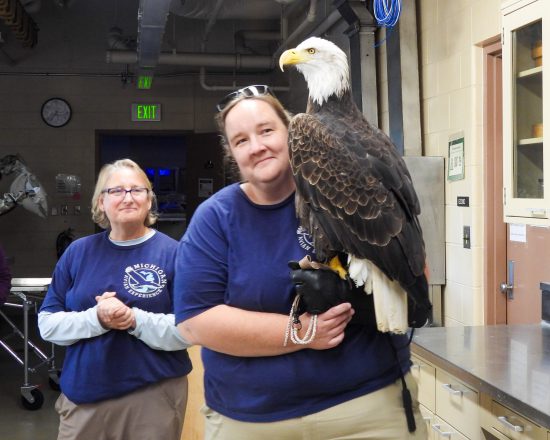
From there, the labs shifted into high gear. Saturday’s avian lab combined real clinical cases with chicken anatomic models, allowing students to practice dissection, recognize normal organ structures, and compare gross necropsy results with birds that had known medical abnormalities prior to euthanasia. Students also practiced venipuncture sites, patient restraint, and diagnostic tissue sample collection. Adding a wildlife conservation element to the session, the lab featured specimens generously donated by the North Sky Raptor Sanctuary, alongside a special visiting eagle brought by the Michigan Avian Experience that gave students an up-close educational look at raptor conservation.
Sunday’s rabbit lab focused heavily on gross anatomy and common clinical procedures. Students practiced simulated spay and neuter surgical approaches, explored venous access sites for blood draws and catheter placement, and examined specialized dental anatomy to prepare for common rabbit health needs.
Kottwitz says that the labs fostered a fantastic collaborative environment among different class levels. "It was great to watch the third-year students take leadership roles and guide their underclass peers while at the same time sharing knowledge with each other, and we all were able to 'round robin' for really cool things if we saw them," Kottwitz says. "Both labs ran a bit longer than I think had been planned, but that's OK—the students were using that time to learn, and everyone seemed to have fun."
The symposium also bridged generations of MSU veterinarians. Among the guest speakers was CVM alumnus Dr. Carl Palazzolo ('78), who returned to campus to share his expertise on bald eagle medicine and gifted a signed copy of his new book, Bald Eagles: The Comeback of Our National Symbol in Michigan, to the club. With overwhelmingly positive feedback from attendees, student organizers are already looking toward the future. What started as a bold, student-led idea has successfully laid the groundwork to become an annual tradition at the College—proving that the next generation of wildlife and exotic veterinarians is already leading the way.