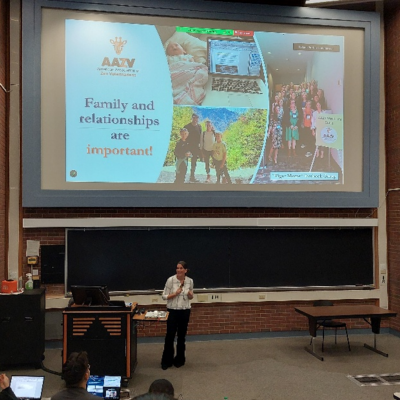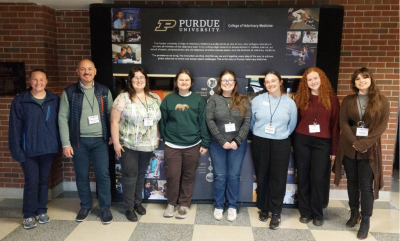
On October 18-19, 2025, the Purdue College of Veterinary Medicine hosted their biennial symposium on Medicine of Aquatics, Amphibians, and Reptiles (MOAAR). A delegation of veterinary students from Michigan State University, including a pre-vet student, attended the event accompanied by Dr. Bartolomeo Gorgoglione, the principal investigator of the MSU Fish Pathobiology and Immunology Laboratory. Gorgoglione, a returning invited speaker at MOAAR, contributed to this year’s symposium with a pre-laboratory lecture on fish biopsy and sampling procedures, as well as a lecture on viral infections in fishes.
This two-day event included lectures on various topics given by experts in their field, as well as wet labs for students to gain hands-on experience. Parallel lectures covered two tracks, one focusing on reptiles and amphibians, the other focusing on aquatics. The event was opened by Dr. Olivia Petritz from North Carolina State University, who gave a keynote lecture on her journey toward the American College of Zoological Medicine board certification.
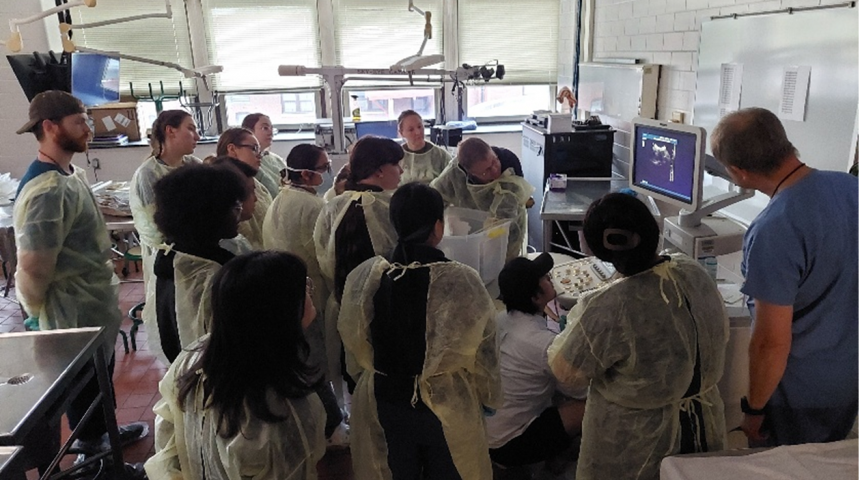
The first day featured several insightful lectures, including an overview of how ocean acidification and warming affect corals and other aquatic wildlife, presented by Dr. Andrew Stamper, conservation science manager and veterinarian for Disney Conservation. In the afternoon, students participated in two wet lab activities. Professor Steven Thompson from Veterinary Clinical Sciences in Purdue hosted a lab called “Reptile Diagnostic Imaging Cases,” in which he guided students through reptile and amphibian anatomy using cadavers to simulate diagnostic imaging procedures. Students worked closely with professional faculty to learn important anatomical structures, identify common ailments on radiographs, and practice using Doppler ultrasonography to evaluate the hearts of live reptiles.
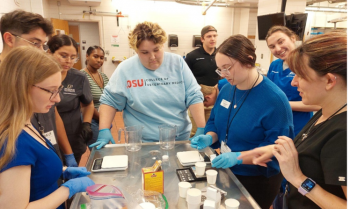
Dr. Jennifer Herbert, the owner of Arbor View Animal Hospital in Valparaiso, Indiana, hosted a lab on fish anesthesia and surgery. Here, students had an opportunity to learn about and practice fish anesthesia using a simulated clinical setup with portable equipment. They were also taught fish biopsy techniques, including blood sample collection methodology. Then, students practiced fish surgery procedures, including eye removal and abdominal exploration, using a euthanized koi. The first day closed with an evening social event held at the Hampton Inn hotel in West Lafayette.
The last day of the symposium began with a keynote lecture on marine mammal anatomical features and medical approaches by Dr. Karisa Tang from the Shedd Aquarium in Chicago, Illinois. The day continued with the two topic tracks and included a wet lab focused on the anatomy and necropsy of cartilaginous fishes. Guided by Thompson and Stemper, veterinary students learned about the unique anatomical characteristics of sharks, rays, and skates by examining preserved specimens and performing ultrasounds on dogfish.
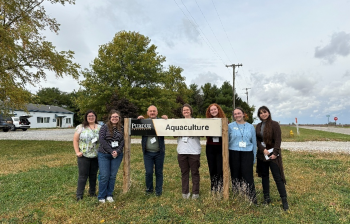
The weekend wrapped up with a trip to Purdue's Aquaculture Research Lab. In addition to hosting ongoing research aimed at improving fish farming, the facility is home to the “Help the Hellbender” program, an influential conservation effort to breed the endangered Hellbender giant salamander—the largest amphibian in North America—in captivity. Scientists are using this program to help repopulate native river populations.
Participation in the MOAAR symposium, which was made possible for MSU students by support from the Department of Pathobiology and Diagnostic Investigation, offered them valuable training and first-hand experience in this unique sector of veterinary medicine. Opportunities to observe veterinary professionals working with exotic species—including aquatic animals, reptiles, and amphibians—are relatively limited. By the symposium’s end, students had gained renewed inspiration, a wider view of the possibilities within veterinary medicine, and meaningful connections with fellow students, Purdue faculty, and leaders in the field.