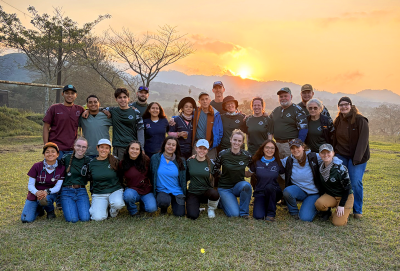
Each January, a group including Spartans from the MSU College of Veterinary Medicine journeys to Mexico to serve working horses, donkeys, and mules in need of veterinary care. This experience, the Equine Welfare in Practice program, gives students hands-on experience with sterilizations, dental care, hoof care, and more, while also providing tangible benefits to communities that rely on these equids.
This year, 6 Spartan DVM students participated, along with students from the University of Tennessee, the Universidad Nacional Autónoma de México, and the Universidad Veracruzana. Faculty from each university also participated, as well as four Michigan-based equine veterinarians (including Spartan alumni!).
Dr. Hal Schott, MSU professor of Large Animal Clinical Sciences, described the group as “enthusiastic and resilient.”
“We were faced with two very rainy days in the first week, and positive attitudes with a strong work ethic persisted, for which I am truly grateful,” he says. And to his students, he says: “I hope this experience was a highlight of your final year in veterinary school, and that you will remember the critical role that working equids play across the globe!”
Below are excerpts from the MSU DVM students’ travel journal.
Day 2 with Hope Catanese: Getting to Know New Colleagues
Today we loaded into a bus to meet our week one veterinary student counterparts from the Veracruz Veterinary School. After brief introductions, we got a tour of the equine facility these students spend a lot of their clinical time at.
From here we all loaded back into the bus for a six hour drive to travel to the UNAM Biology Research Facility where we would be spending our nights after working each day. We took this bus ride to get to know our new friends, with Google Translate being our best friend. Having the back-up translator apps was helpful, but trying by ourselves first made for a very fun trip! I think we all knew just from this bus ride we would be having a great time with this group.
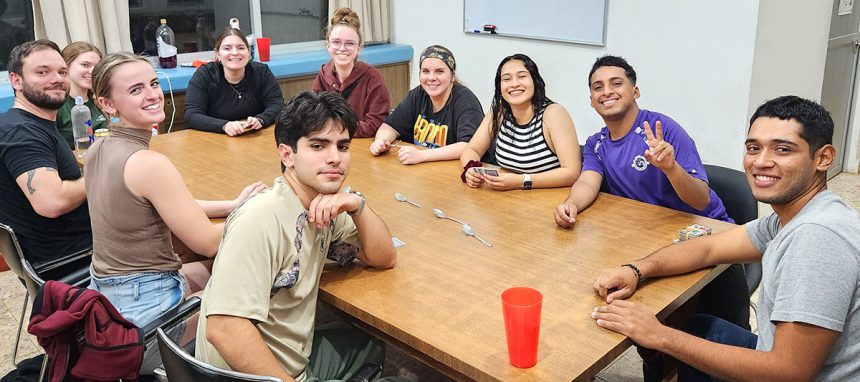
The evening was wrapped up continuing to get to know the other Mexican students in the library and get our jobs for the first work day tomorrow! We were able to teach them all how to play a card game named “Spoons.” It is safe to say this will probably be a staple throughout the rest of the week, but the kitchen may be upset they are missing their spoons!
Day 3 with Maddy Dashiell: Rain Can’t Stop Us
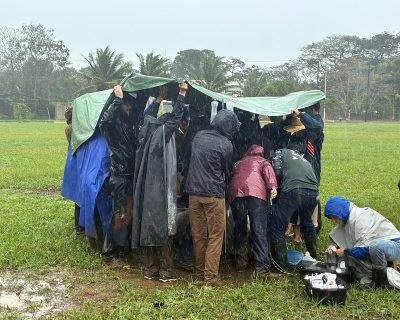
Our first morning at the Los Tuxtlas Rainforest Research Station began with heavy rain and unexpectedly cold weather that persisted throughout the day. After breakfast prepared by the kitchen staff, we headed out with our UV partners to our first community visit in La Palma, ready to work despite the conditions.
We arrived at a soccer field where a small group of horses was already waiting. With rain pouring down, we set up quickly and got straight to work. At first, things moved slowly as we adjusted to the weather and our new workflow, but before long there was a steady stream of horses and foals coming through. Despite the challenges, we were able to perform 2 dental procedures, 4 castrations, 9 pregnancy palpations, 1 sarcoid removal, and 3 farrier trims. The farrier and reproduction stations stayed busy throughout the day, helping as many equids as possible.
As the rain intensified, our surgery team came together to create a makeshift tent using a tarp and a few extra hands so we could safely continue castrations. Watching everyone collaborate, students, partners, and community members, was an incredible way to start the trip.
Day 4 with Dani Thurman: A Personal Success
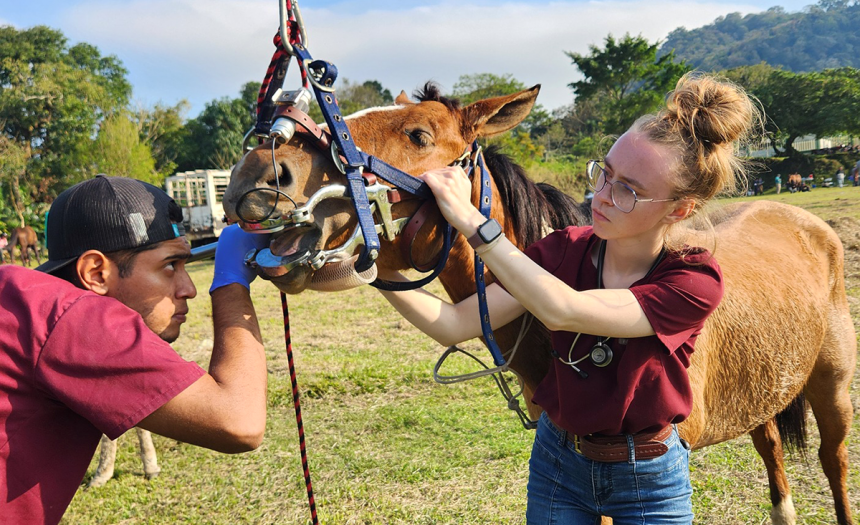
My favorite case from the day was a 4 year-old stallion, who was presented for castration but was toe-touching lame. With encouragement from the amazing doctors on the trip, I was able to localize the lameness to the fetlock and suspected either a tear of the collateral ligaments or a fracture of P1. We performed point of care ultrasound with a handheld probe and phone. While the diagnostic detail was limited, it was still very informative to practice with and learn from. I really appreciated the opportunity to work through this case independently and then recommend next steps… The owner was very thankful and it felt like one of my first personal success stories, though the horse still has a long journey of rest and healing ahead.
After the long day of work, the welcoming Coxoapan community prepared delicious food for us and we celebrated together until the sun went down. It was an amazing day and I could not be more thankful for the opportunity to meet and work with so many amazing people.
Day 7 with Emmeline Wachter: In Balzapote
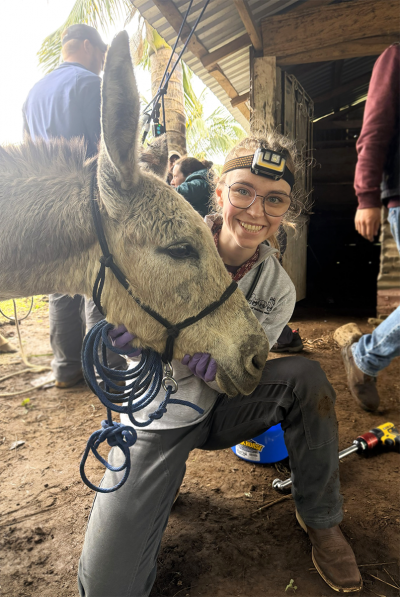
One of the most interesting cases of the day was a mare who presented to the farrier station for lameness with a presumed hoof abscess. Our student and doctor team began cleaning the hoof and found a small rock buried in the lateral hoof wall.
After exploring the area and removing debris, the pocket grew larger and larger, eventually exposing 5 large rocks with accompanying packed dirt and debris! The open hole within the hoof was flushed and cleaned with betadine solution and lots of gauze. Dr. Davis then packed the area with more gauze and betadine solution and a sturdy hoof wrap was placed around the entire hoof to ensure protection for the mare to make it home comfortably.
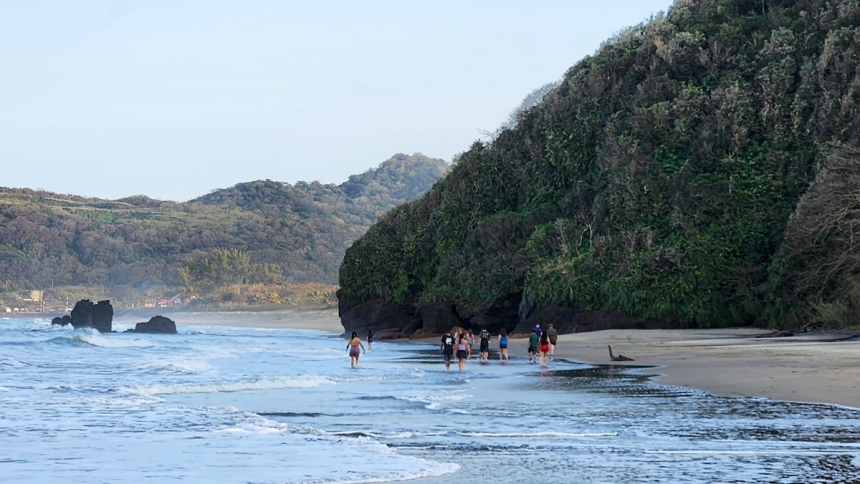
After a long week of helping the community equids, our team enjoyed a relaxing afternoon hosted by the director of the research station we have been staying at. Students found numerous sand dollars along the shore and the scenic views were picture worthy to say the least. Some students even braved the cooler temperatures to go swimming off the shore as waves splashed the scenic shoreline.
Day 11 with Hope Catanese: Confidence in the Field
The weather today was very sunny for the majority of the day, with a small amount of rain just as we were heading out, great timing! While the turnout was lower than initially anticipated for this location, we surely stayed busy all day. I personally was on anesthesia, and learned so much! To go from being quite unsure overall of equine field anesthesia to anesthetizing, maintaining, and recovering horses by the end of the day was extremely rewarding.
Day 14 with Cecile Koceyan: Wrapping it Up
Today was our last working day! We arrived at the community around 10 in the morning and started setting up. Our main work place was what seemed to be an arena for rodeo events and it was also sunny out so we were all very happy with the conditions! We had many cases waiting for us upon our arrival and after all of our equipment was all set up, the various intake teams went straight to work.
We quickly had a long list of equids that needed to be castrated as well as dental cases. One of the MSU students even had the opportunity to perform a vulvoplasty with Dr. Jim Schumacher. In the middle of the working day, the community all came together to provide lunch for us. There was a large variety of food and they even brought a big vat of cooked pork in the back of their truck. It was very nice feeling the sense of appreciation and community with them.