
Imagine this: You or someone you love is diagnosed with liver cancer. The tumor can be removed through surgery—but there’s a serious concern. Surgeons worry that the remaining portion of the liver may not regenerate, and without that regrowth, the surgery could do more harm than good.
For some patients, that’s where the story ends. Surgery is not an option, reducing the chance for a longer life.
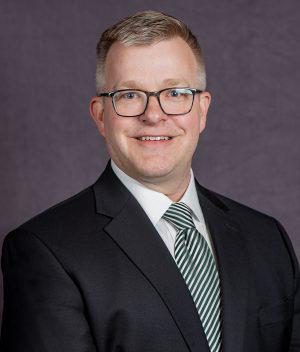
But at Michigan State University’s College of Veterinary Medicine, Dr. Jim Luyendyk is working to rewrite that ending—using science focused on human liver regeneration, developed in a veterinary setting, and poised to influence treatment around the world.
“Veterinary medicine isn’t just about animals,” says Luyendyk, a professor in the Department of Pathobiology and Diagnostic Investigation. “Our research often translates directly to human medicine. The two are more connected than most people realize.”
That idea—known as One Health—drives the work in Luyendyk’s lab, where a team of researchers explore how blood clotting influences liver regeneration in human patients. The implications for veterinary medicine are real, too, opening the door to applying similar techniques to animal care in the future.
From MSU’s Lab to Mayo Clinic
The breakthrough began with a question: Why do most livers regenerate after surgery, but some don’t?
Luyendyk’s team discovered that certain factors in the blood that control blood clots play a surprising role in that process. They have identified ways that could predict—even before surgery—which patients are at risk for poor liver regrowth. Even more compelling, they found that a simple strategy to change the levels of one of these factors before surgery may prevent those complications.
This isn’t just theory. Their lab-based discoveries align with a post-hoc analysis of clinical trial data from the Mayo Clinic, where real-world evidence in humans suggests a widely available, inexpensive medication may improve outcomes in patients after liver surgery. While the team is based in a veterinary college, the research is human-centered and was informed by experimental models.
The ideas caught the eye of Luyendyk’s collaborators (clinicians at Mayo Clinic), who then uncovered translational evidence supporting Luyendyk’s data using real patient data from a large, published clinical trial.
“We’ve been missing a major clinical opportunity,” says Luyendyk. “Now, we’re starting to understand how to detect and even prevent post-hepatectomy liver failure.”
A New Path for More Patients
Right now, some patients with liver cancer are told that surgery isn’t an option, or could come with additional risks, because the remaining liver might not recover. This research could change that conversation.
It’s a new way to think about liver surgery: not just managing risk but anticipating and proactively treating it.
The implications go beyond cancer. The ability to safely remove liver tissue and promote regrowth could improve outcomes in a range of diseases. And because these same surgical approaches are used in veterinary medicine, the impact spans species.
“This is translational research at its best,” says Luyendyk. “What we learn in the lab has the potential to improve human health and animal care at the same time.”
Collaboration, Innovation, and Impact
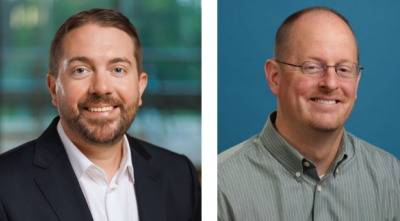
This work is the product of collaboration between MSU and research teams at Versiti in Milwaukee, UNC Chapel Hill, and the Mayo Clinic.
Dr. Christian Kastrup, professor at the Versiti Blood Research Center, has developed new tools to tailor the expression of the factors controlling liver regeneration. Dr. Matthew Flick, professor at UNC Chapel Hill, is an expert in how exactly these factors control cell function, and collaborates with the team to mine the details, identifying even more optimal approaches to intervene.
“Our lab is one of very few in the world studying the intersection of blood clotting and liver regeneration,” Luyendyk explains. “We’re internationally recognized for that focus and we’re proud that MSU is at the forefront of such an important collaboration.”
Why It Matters
You might not have liver cancer. But most of us, at some point, will face a difficult medical decision for ourselves or someone close to us. In that moment, having more options—and better ones—could make all the difference.
That’s what this research is about. It’s not just liver cells and clotting factors—it’s hope, made real through science. And it’s happening at a veterinary college, where the health of animals, people, and the planet come together in meaningful ways.
“We’re not just solving problems in animals or humans—we’re solving them for both,” Luyendyk says. “That’s what inspires us to keep pushing.”