By Kelsie Donaldson on January 23, 2026
Thumbnail

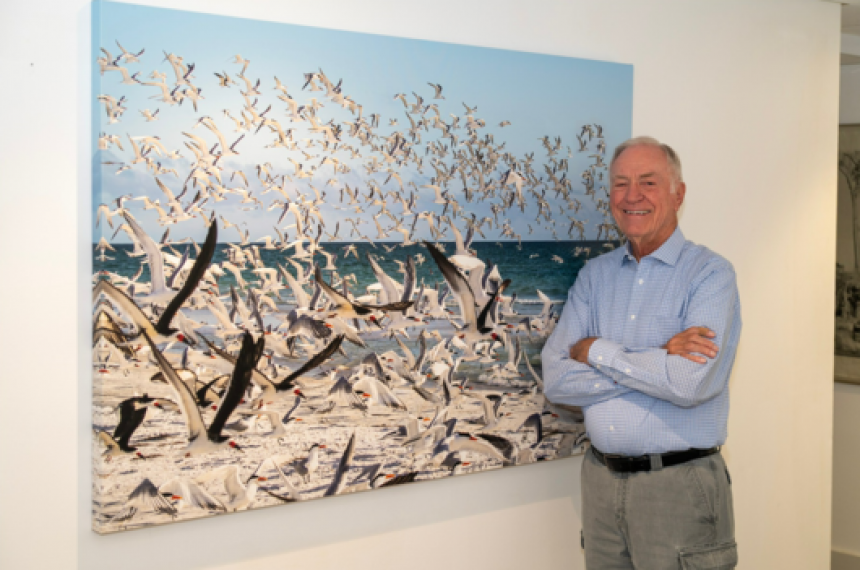
Lou Newman’s photography is an extension of a lifetime spent paying attention. A veterinarian and veterinary pathologist who earned his PhD at Michigan State University in 1978, Newman built a career rooted in observation, problem-solving, and animal care. In addition to doing his doctoral research at MSU, Newman served as an instructor in Large Animal Clinical Sciences and led the College’s Veterinary Extension Program. It was here at Michigan State that Newman came to rely on photography—a hobby he’d always enjoyed—as an essential tool in teaching.

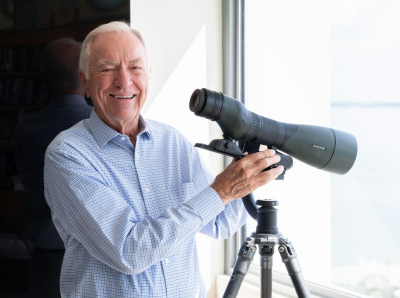
After he retired from veterinary medicine, Newman turned more fully to photography. Though he briefly explored this work as a business, he ultimately found the greatest satisfaction in the act of observing and capturing wildlife itself—using his retirement years to travel, refine his craft, and continue doing what he had always done best: paying close attention to the world around him.

Now 95 years old, Newman has been to every state, 72 countries, and all 7 continents. Settled in Sarasota, he still spends a large portion of his days behind the lens.

What drew you to veterinary medicine and then veterinary pathology?

It started when I was five years old and decided I wanted to be a farmer instead of a fireman. I never really deviated much from that desire. I majored in animal science at the University of New Hampshire. For the first two years, I was content assuming I would go into farming or ranching. After my second year of college, I became increasingly aware of veterinary medicine and the role it played in agriculture, and I decided that I wanted to go to veterinary school.

I went to vet school at Cornell and then moved out west to practice. I worked with another practitioner in a primarily cattle practice in Wyoming before establishing my own practice in Glasgow, Montana. There was no other veterinarian for 150 miles in any direction. In that community alone, there were 5,000 people, but 70,000 cows!

As my practice grew, I became involved in different national organizations, and Fayne Oberst, the first department chair of the MSU Large Animal Clinical Sciences Department, started recruiting me to come to Michigan State. He approached me to teach in the Large Animal Department and head up the Veterinary Extension Program. I was assured that I could get a PhD while I instructed at Michigan State, so I accepted the position and began the process of pursuing a master’s degree and then a PhD.

What kinds of questions or problems were you most interested in exploring through your research at MSU?

Throughout my master’s degree, I had become increasingly interested in diagnostic pathology. My research at that time was a scanning electron microscopy study on E. coli as it affected newborn pigs.

Then, when I was pursuing my PhD, I worked on a project with my close friend and classmate, Charles Mebus, a faculty member at The University of Nebraska who had developed a vaccine for the coronavirus that affects calves. The research involved vaccinating calves in utero to stimulate an immunity. The most challenging aspect of this project was delivering the calves into gnotobiotic isolators by cesarean section and conducting all of the surgeries and collections on the calves within the gnotobiotic isolators.

What kind of work was involved in your role running the Veterinary Extension Program? How about your role teaching students?

The Veterinary Extension Program was critical in solving some of the problems that the beef and dairy industries were facing. We worked closely with Extension personnel in the Animal Science Department and in the Dairy Science Department at MSU. We did a lot of teaching, both to farmers and veterinarians; we had about 50 talks and short courses per year. Most of the time, those programs involved both a local veterinarian and a dairy science or animal science speaker. Also, quite often when I was looking at individual problems on dairy farms, I took students with me, so they had the opportunity to do things like collect milk samples and bring them back for bacteriologic culture.

In the student curriculum, I was responsible for the toxicology core, so I taught the clinical aspects of toxicology and ran that lab. I also taught the poisonous plants course with an expert on poisonous plants from the Botany Department.

You’ve worked in private practice, academia, diagnostics, and outreach. Which role taught you the most and why?

Each of those roles was a significant learning experience. While I was practicing, I never failed to run across something new. When I was working in diagnostics, I learned a lot that I was able to take with me when I eventually became the director of the Veterinary Diagnostic Laboratory at the University of Kentucky and then director of the Veterinary Diagnostic Laboratory for the University of Georgia. Each of the positions I’ve held contributed to my ability to move to the next step in my career and work in different environments.

Do you think being a veterinarian impacted how you observe animals through a camera lens?

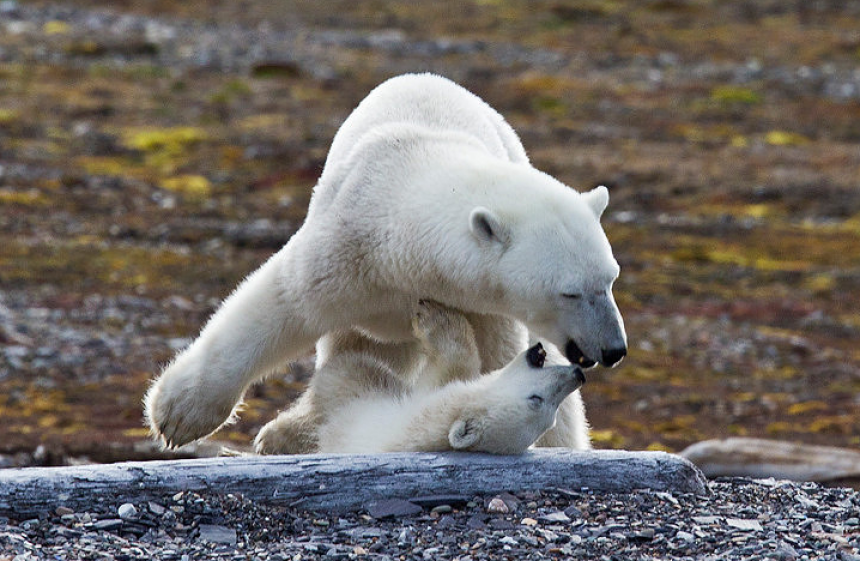
Tremendously. Because I was primarily interested in cattle from the time I was young, I was eager to photograph large wildlife like deer, antelope, elk, and bears. I’ve gone to the Arctic 10 times to photograph polar bears. And now, as a Florida resident, birds have become increasingly important in terms of my wildlife photography. Being a veterinarian means that I’ve been on the frontlines observing animal behavior, and I’ve learned a lot about timing and attention to detail—both of which shape the way I approach photography.

How do you think veterinarians are uniquely positioned to contribute to conservation and wildlife understanding? What about photographers?

Veterinarians have a unique understanding of the value in protecting animals and saving species from extinction. They understand the role that animals play in terms of our overall well-being, as well as how different species affect each other and their ecosystems.

Photographers also play a key role in conservation. When we talk about the need to preserve species or environments, or the damage that is being done, visualization is extremely helpful. Photographers can be crucial in conveying the importance of conservation to the public.

What advice would you give MSU College of Veterinary Medicine students who are just beginning their own journeys?

My advice is to always have a plan—but be willing to adjust it as you go. It’s important to have a clear goal in mind so you can keep asking yourself: Is what I’m doing moving me closer to that goal, or further away from it? A ship without a rudder won’t go anywhere. But if you have a rudder and you’re moving steadily, it’s easy to turn and head in a new direction when you need to.

Now, at this stage of life, what continues to motivate you to keep learning and creating?

My primary motivation today is to share photographs with people who will enjoy them. In 2002, I sent my kids an email describing some animals I was photographing, and that has grown into several emails per year to a list of more than 850 people. There’s usually a descriptive paragraph or two at the beginning, and then my photographs with captions. Sometimes the emails are about a particular species, and it will describe that species in detail, and sometimes it’s more about documenting a good photography site. I’m aware of four newsletters that also pick up my emails to include my photos. I really enjoy sharing those.

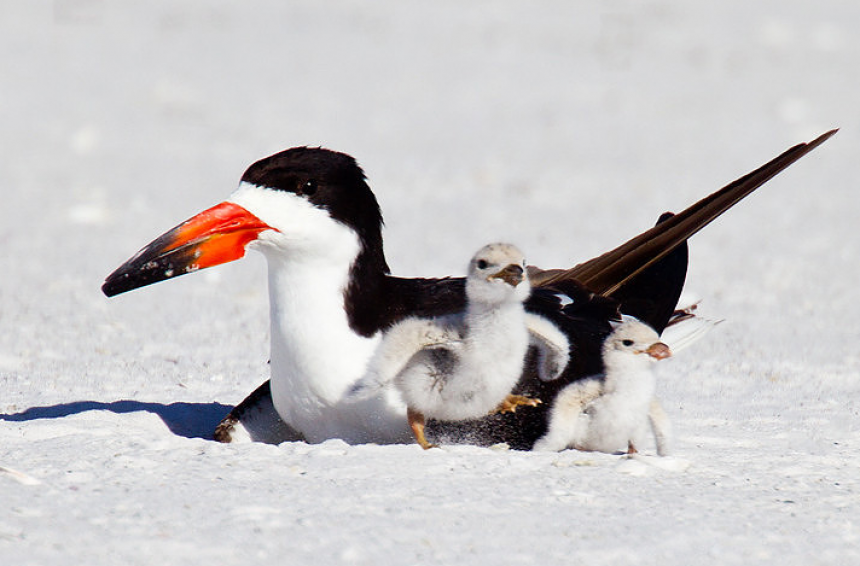
I also send out another half dozen emails a year to the people who live in my retirement community here in Sarasota about various topics they may be interested in. For example, how to see black skimmers nesting on Lido Beach, or how to get a look at the white pelicans frequenting our bay during a period of low tides. There’s a special joy in using my photographs and emails to teach and inspire others.

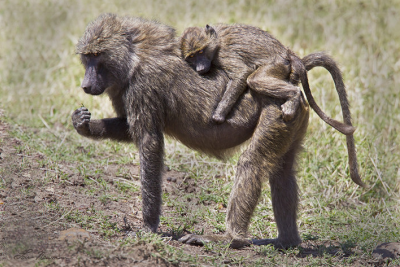
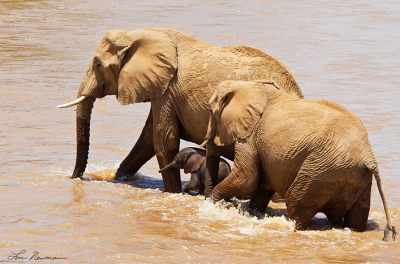
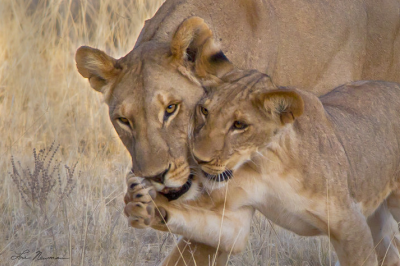
Check out some of Newman's photos below and see more on his online portfolio.
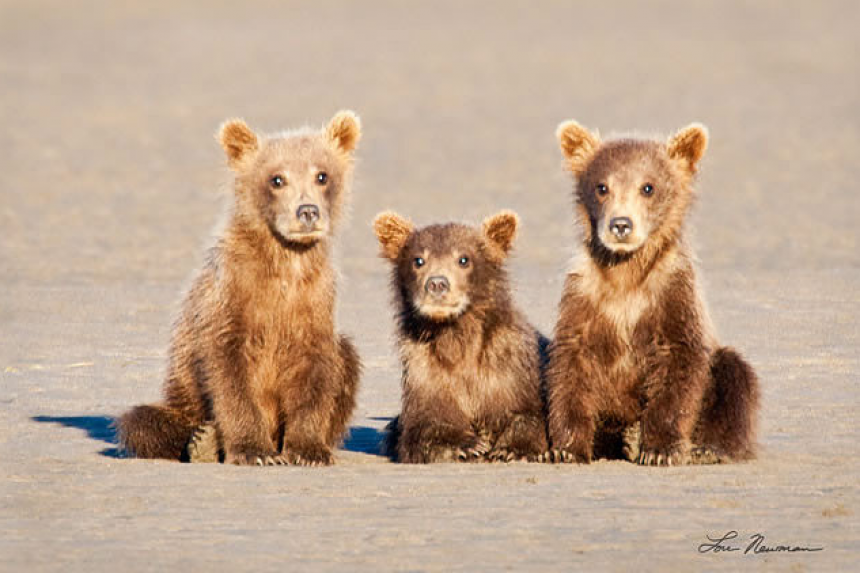
Bears
Baboons
Elephants
Polar Bears
Lions
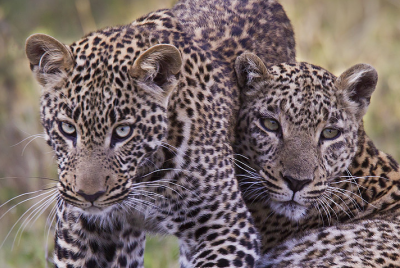
Leopards
Black Skimmers
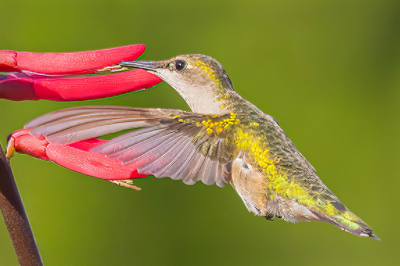
Hummingbird
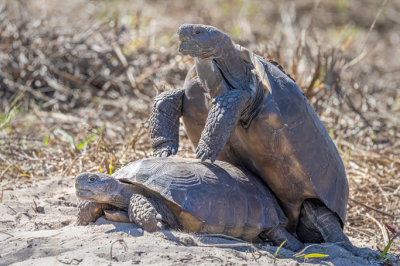
Turtles
Newman With Picture 40