
Vetschool Tails
Our latest musings on how our Spartans are changing the world for animals and humans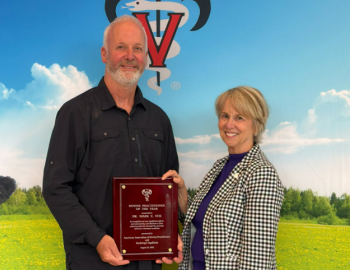 Q&A with AABP Bovine Practitioner of the Year: Alum Dr. Mark Fox
Posted
by
Kelsie Donaldson on September 18, 2026
Q&A with AABP Bovine Practitioner of the Year: Alum Dr. Mark Fox
Posted
by
Kelsie Donaldson on September 18, 2026
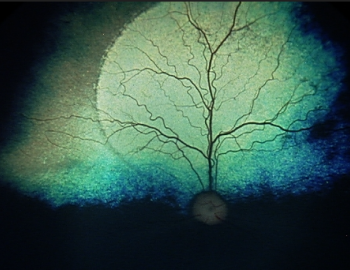
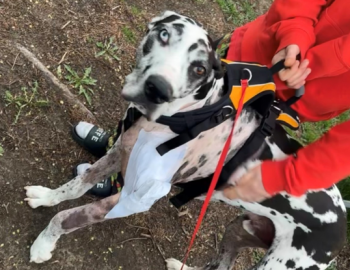 Advanced Minimally Invasive Orthopedic Surgery Helps Great Dane Recover from Gunshot Wound
Posted
by
Kelsie Donaldson on August 20, 2026
Advanced Minimally Invasive Orthopedic Surgery Helps Great Dane Recover from Gunshot Wound
Posted
by
Kelsie Donaldson on August 20, 2026
More Stories
RSS A Case of “Open Mouth and Insert Hoof”: How a Routine Hoof-Trimming Resulted in Life-Threatening Respiratory Distress in Wilson, the Pot-Bellied Pig
Posted
on November 05, 2019
A Case of “Open Mouth and Insert Hoof”: How a Routine Hoof-Trimming Resulted in Life-Threatening Respiratory Distress in Wilson, the Pot-Bellied Pig
Posted
on November 05, 2019
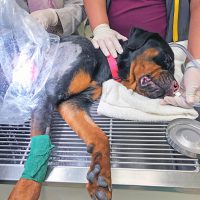 Use of an Acellular Fish Skin Graft Rich in Omega-3 (Kerecis™ Omega3 BURN) in a Canine Burn Wound
Posted
on July 29, 2019
Use of an Acellular Fish Skin Graft Rich in Omega-3 (Kerecis™ Omega3 BURN) in a Canine Burn Wound
Posted
on July 29, 2019
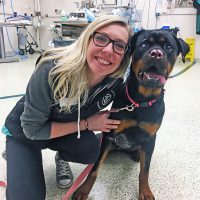 Stella’s Story: How One Dog’s Inner Fire Burned Stronger than the One that Injured Her
Posted
on May 22, 2019
Stella’s Story: How One Dog’s Inner Fire Burned Stronger than the One that Injured Her
Posted
on May 22, 2019
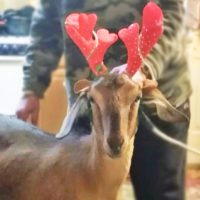 Case Study: Successful Tube Cystostomy for Mixed-Breed Goat with Obstructive Urolithiasis
Posted
on May 02, 2019
Case Study: Successful Tube Cystostomy for Mixed-Breed Goat with Obstructive Urolithiasis
Posted
on May 02, 2019
Popular Categories
Happy Tails Stories of success from the MSU Veterinary Medical Center Clinical FocusTechnical tales for veterinarians and others who enjoy medical procedures The Dean'sPaw-spective